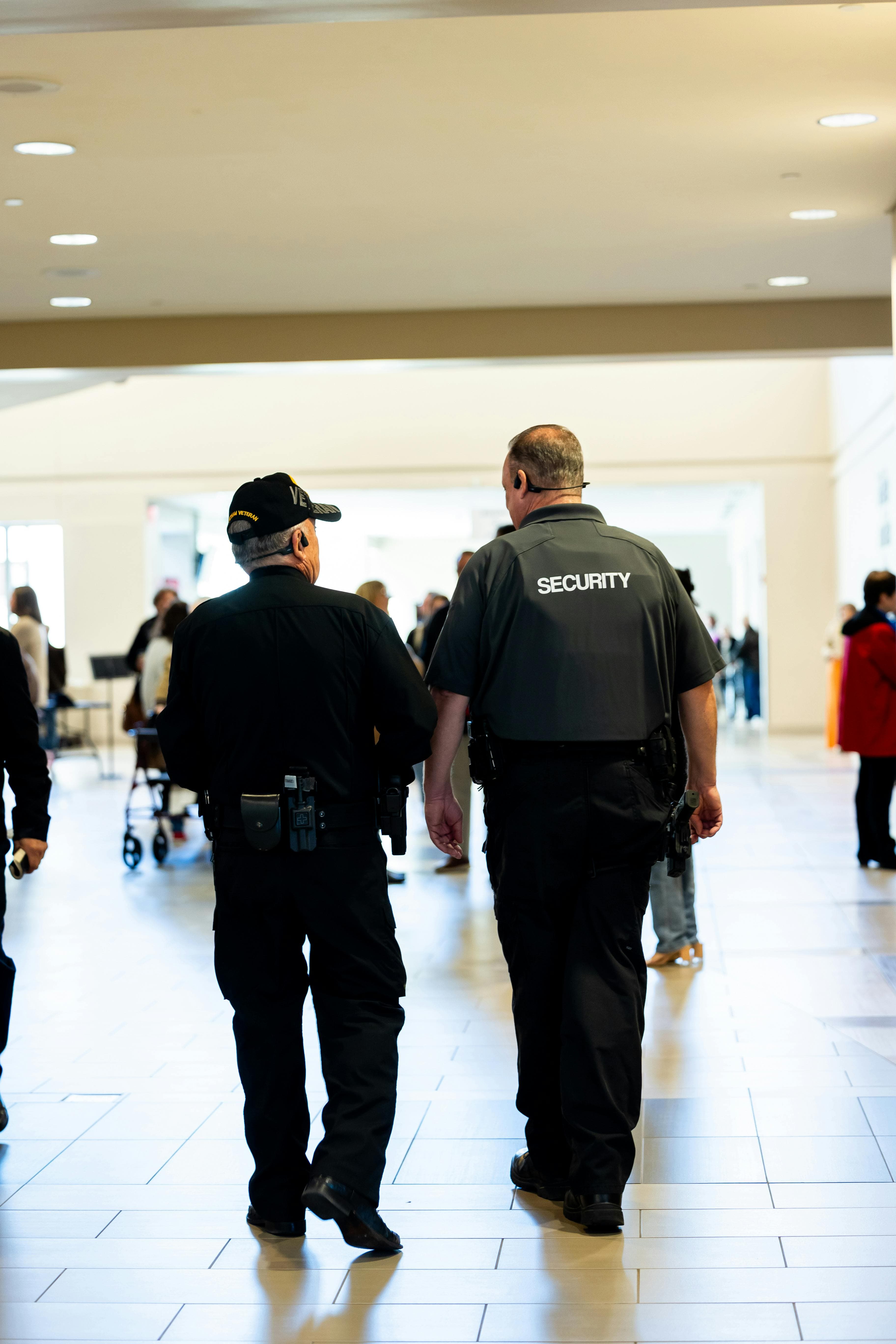
Armed or Unarmed: How Minnesota Businesses Should Decide
A practical guide for Minnesota businesses choosing armed or unarmed security, including state training rules and when a site assessment should decide.
Most owners pick armed or unarmed coverage from a feeling. One wants the strongest presence available. Another worries a firearm will change how customers walk through the door. Neither feeling is a staffing plan. Minnesota already separates the two jobs. Someone working under a protective agent license may not carry a weapon on those duties until board-certified armed training is finished, and that training has to cover when force should not be used. The state does not choose the post for your building. Cash handling, hours, layout, and the incidents already in your log do. This guide is for owners, property managers, and event organizers in the Twin Cities and greater Minnesota who need to make that call.
What an unarmed post and an armed post are for
An unarmed assignment is not a cheaper copy of an armed one. In many retail, hotel, apartment, and office settings, the useful work is steady presence. The officer watches who comes in, notices the door that will not latch, writes down what happened, and talks a tense moment down before it becomes a police call.
An armed assignment fits when the risk to people or to concentrated assets is higher, and when the client and the company have both accepted what a firearm on site requires. The armed work Integrity Protection Agency takes includes cash handling, retail loss prevention where the risk is elevated, and high-traffic events. The weapon is there for the situation that demands it.
Integrity Protection Agency is veteran-owned, Minnesota-licensed, and insured and bonded on the contracts we accept. Armed officers on our posts are firearm certified. Training for those assignments includes de-escalation, first aid, and firearm proficiency beyond the state minimum.
The license sits with the company
If you hire a firm to provide guards for a fee, Minnesota treats that firm as a protective agent. Minnesota Statutes section 326.338, subdivision 4, covers guards, private patrol, and other security personnel hired to protect people or property or to prevent theft. The license belongs to the business. Individual officers on the schedule do not each hold a separate protective agent license.
Minnesota Statutes section 326.336 still puts the license holder on the hook for every employee’s conduct. Before someone serves on a post, the employer submits fingerprints to the Bureau of Criminal Apprehension. Until the bureau reports that the person is clear of the Minnesota convictions that disqualify someone from this work, that person may be trained and may not yet serve as a protective agent.
Proposals often shorten all of this to “licensed officers.” Ask for the company license. Then ask how the firm confirms that the specific people assigned to you are cleared to work and, if the post is armed, cleared to carry.
Training every protective agent has to finish
The hour counts below come from Minnesota Rules chapter 7506 and from the training page published by the Private Detective and Protective Agent Services Board. They are minimums. A careful company can require more.
Every person employed as a protective agent must complete at least 12 hours of pre-assignment training within the first 21 days of employment. That is Minnesota Rules part 7506.2600. For protective agents, the block has to cover a security overview, legal authority and liability, communications, ethics, incident assessment and emergency response, and the Minnesota private detective and protective agent statutes and rules. Someone who leaves the work for three years or longer has to take it again.
Every employee also completes six hours of board-certified continuing education each license year. The clock follows the company’s license year, not the calendar and not the employee’s hire date. The board’s training page uses a plain example. If a license renews on May 25, 2025, year-one training falls between May 1, 2025, and April 30, 2026. When someone is hired during year one, pre-assignment training can satisfy that first year’s continuing-education block. Six hours are still required in year two.
The extra gate before someone works armed
Unarmed employees are not required to take the weapons curriculum. Armed employees are, and they have to finish it before they provide licensable services while armed. The board’s training page describes that initial armed course as six hours, taken once. Minnesota Rules part 7506.2300 states the gate directly: no license holder, manager, partner, or employee may carry or use a weapon on licensable duties without successfully completing board-certified training.
That course is not a day at the range and nothing else. Minnesota Statutes section 326.3361 and rule 7506.2300 require firearms training on the legal limits in sections 609.06 and 609.065, training in alternatives to force, including when force should not be used, and first aid. The rule puts the firearm and the decision not to use it in the same course of study.
Continuing training splits again. Rule 7506.2700 requires the six hours a year that everyone completes, then an additional six hours a year for armed people in the weapons they actually use. For anyone who carries a firearm, that weapons block includes annual certification on a firing range. The same rule requires an approved first aid course and evidence of certification in CPR and first aid.
The board’s public summary and the rule are not worded the same way. The Department of Public Safety training page treats the first aid course as part of those six armed hours. Rule 7506.2700 lists annual range certification inside the extra six hours, then lists the first aid course and CPR evidence as further armed requirements. Ask how a company documents all three. If an officer starts armed work during year one of the license period, the board says the initial course can cover that year’s armed training. Six more hours are still due in year two.
Sites where unarmed coverage is usually enough
Unarmed coverage is the right default for a large share of Minnesota properties. A hotel lobby, a corporate office with controlled daytime access, a congregation that wants a calm person at the door, or a suburban apartment community dealing with propped doors and package piles: these are observation and service posts. Cash and high-value goods are not piled in one exposed place. Staff are present when it matters. Earlier incidents were trespass, nuisance complaints, or theft without a weapon or an assault. A firearm does not fix a broken latch.
Integrity Protection Agency places unarmed officers in those lower-risk retail, hospitality, residential, and corporate settings. If a client still asks for unarmed coverage on a higher-risk property, we say so. Pricing and staffing can increase, because the liability and the oversight required to keep the officer safe both go up. That is a reason to reconsider the post.
If the schedule in front of you still does not sort itself, talk with Integrity Protection Agency about your property’s security needs. A walkthrough beats a preference. We look at entrances, cash, after-hours activity, and the incidents you can already document, then say whether an unarmed presence, an armed post, or a different layer such as patrol timing is the honest fit.
Sites where an armed post is the more honest match
Armed coverage earns its place when the harm from getting the choice wrong is larger than the discomfort of a visible weapon. Cash rooms and regular cash movement are the clearest example. So is a retail floor where loss prevention happens in a higher-risk setting, or an event crowded enough that screening and a prepared response matter. Those are the conditions our armed service is built around.
Repeated incidents that staff cannot safely handle, valuable equipment left through long empty hours, several hard-to-control entrances, or a record of threats rather than only missing merchandise belong in the same conversation. None of those facts, standing alone, means the post must be armed. Together they mean the choice is no longer a style preference.
Minnesota Statutes section 326.3384 forbids license holders from displaying words such as police, sheriff, or law enforcement on a badge, vehicle, uniform, or advertisement in a way that implies a government role. A proposal that leans on looking like the police is a warning, not a selling point.
The same statute, at subdivision 1a, says a license holder may not provide armed protective personnel to a labor dispute or a strike location. There is an exception for armed security used in the usual course of business to protect people, property, and payroll. If your need is tied to a strike, say that at the start so the company can tell you what it can and cannot staff.
Questions to ask before you sign
The hour rules are public. A company that cannot explain them is telling you something. Ask when the people on your post finished pre-assignment training, which license year their continuing education follows, and, if the post is armed, when initial armed training was completed. Ask how range certification, first aid, and CPR are documented.
Ask what the post orders say about force. You want de-escalation first, a written reporting habit, and a clear path to someone at the company when something happens on a weekend. Insured and bonded coverage should show up as documents, not as a line in a brochure.
Then ask the question that actually decides the contract. What about this property makes armed coverage appropriate, or what about it makes unarmed coverage enough? A useful answer names your doors, your cash, your hours, and your incident log. A weak answer names a package.
FAQ
Does an armed officer replace the police? No. Private protective agents are not peace officers. They protect a client’s people and property under a license and a set of post orders. Serious crimes still belong with local police. A written report can help reconstruct what happened. It does not create police powers.
Can coverage change later? Yes. Properties often start with unarmed officers or a patrol schedule and add an armed post only if operations change or an assessment supports it. The assigned officers still have to finish armed training before they work armed. It is not a uniform swap on the morning of a shift.
Do cameras make this choice unnecessary? No. Cameras help you see what happened, and they deter some behavior. They do not challenge a person at the door, move cash, or decide whether a firearm belongs on that site.
A choice you can explain
Sometimes the better spend is a lock, a light, a change in how cash moves, or a patrol during the hours the building is empty. Sometimes it is a person at the door, armed or not. Request a security assessment for your home, business, or event, and contact Integrity Protection Agency to talk through practical options for your property.
Sources
Minnesota Statutes section 326.338, persons engaged as private detectives or protective agents: https://www.revisor.mn.gov/statutes/cite/326.338
Minnesota Statutes section 326.336, employees of license holders: https://www.revisor.mn.gov/statutes/cite/326.336
Minnesota Statutes section 326.3361, training requirements: https://www.revisor.mn.gov/statutes/cite/326.3361
Minnesota Statutes section 326.3384, prohibited acts: https://www.revisor.mn.gov/statutes/cite/326.3384
Minnesota Statutes section 609.06, authorized use of force: https://www.revisor.mn.gov/statutes/cite/609.06
Minnesota Statutes section 609.065, justifiable taking of life: https://www.revisor.mn.gov/statutes/cite/609.065
Minnesota Rules chapter 7506, including parts 7506.2300, 7506.2600, and 7506.2700: https://www.revisor.mn.gov/rules/7506/
Minnesota Department of Public Safety, Private Detective and Protective Agent Services Board, Training: https://dps.mn.gov/about-dps/associated-boards-cmtes-and-task-forces/private-detective-and-protective-agents-board/training